
Presentations highlight clinical progress in chronic ischemic stroke and the company’s platform for translating allogeneic iPSC-derived forebrain neural progenitor cells into investigational therapies
KYOTO, Japan, October 2026 — Hopstem Biotechnology (“Hopstem”), a biotechnology company developing allogeneic induced pluripotent stem cell (iPSC)-derived cell therapies, presented two-year clinical follow-up results for its lead investigational product, hNPC01, in chronic ischemic stroke at the ISSCR iPSC 20th Anniversary Symposium in Kyoto, Japan. Chia-Hua Maggie Ho, Ph.D., Chief Operating Officer of Hopstem, subsequently delivered an invited presentation in Kyoto University’s Center for iPS Cell Research and Application (CiRA) Open Seminar Series, providing a comprehensive overview of the company’s allogeneic iPSC-derived forebrain neural progenitor cell platform and progress in clinical translation.
Held at the Kyoto International Conference Center on October 20–22, the symposium, “20 Years of iPSC Discovery: A Celebration and Vision for the Future,” was organized by the International Society for Stem Cell Research (ISSCR) in partnership with CiRA and co-sponsored by the Japanese Society for Regenerative Medicine (JSRM). Chaired by Professor Shinya Yamanaka, a pioneer of iPSC technology and co-recipient of the 2012 Nobel Prize in Physiology or Medicine, the meeting brought together scientists, clinicians, and industry representatives from around the world to reflect on two decades of progress from foundational discoveries to clinical applications.
Two-Year Clinical Follow-Up in Chronic Ischemic Stroke
Dr. Ho presented follow-up findings from two open-label, single-arm Phase 1 studies evaluating hNPC01 in patients with chronic ischemic stroke. During follow-up of up to 24 months, no dose-limiting toxicities, deaths, abnormal graft proliferation, or tumor formation were observed. Improvements in motor function, measured using the Fugl-Meyer Motor Scale (FMMS), were sustained during follow-up.
MRI and fluorine-18 fluorodeoxyglucose (¹⁸F-FDG) imaging findings also provided indirect evidence suggestive of graft survival and metabolic activity for up to 24 months.
Invited CiRA Seminar: From iPSCs to Patients
On October 27, Dr. Ho delivered an invited presentation at CiRA titled “From iPSCs to Patients: Advances in Neural Progenitor Cell Therapy and Clinical Translation for Chronic Stroke.”
Structured around the complete manufacturing pathway “from donor material to clinical drug product,” the presentation covered donor screening, tissue collection and transport, iPSC reprogramming, clone selection, cell banking, drug substance and drug product manufacturing, release testing and quality characterization, and cold-chain storage and distribution.
Dr. Ho concluded with an overview of the latest hNPC01 clinical data and progress in the company’s global regulatory development program.
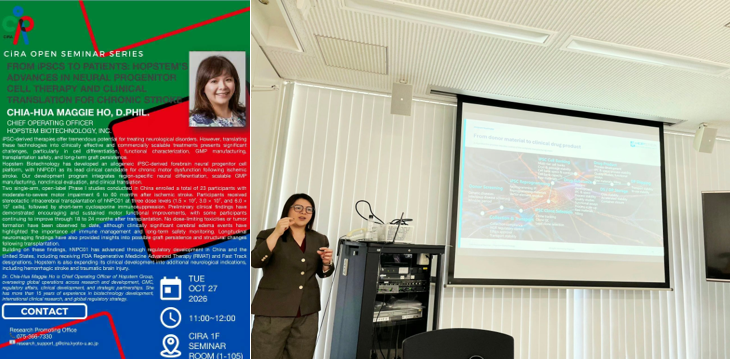
Dr. Chia-Hua Maggie Ho outlining the donor-to-drug GMP manufacturing chain at the invited CiRA seminar.
About hNPC01
hNPC01 is Hopstem’s proprietary, investigational allogeneic iPSC-derived forebrain neural progenitor cell product, formulated for injection.
The ischemic stroke program has received authorization to conduct clinical trials from China’s National Medical Products Administration (NMPA) and the U.S. Food and Drug Administration (FDA), as well as FDA Fast Track and Regenerative Medicine Advanced Therapy (RMAT) designations.
hNPC01 is the world’s leading iPSC-derived forebrain neural progenitor cell therapy candidate targeting neurological conditions involving injury to the forebrain.
In July 2026, the company also received FDA clearance of its Investigational New Drug (IND) applications and Fast Track designation for hNPC01 in both hemorrhagic stroke and traumatic brain injury (TBI).
About Hopstem Biotechnology
Founded in January 2017, Hopstem Biotechnology is an innovative biotechnology company focused on developing allogeneic iPSC-derived cell therapies for global clinical development. The company operates approximately 6,400 square meters of facilities across Hangzhou and Shanghai, encompassing cell therapy research and development laboratories, Good Manufacturing Practice (GMP) manufacturing suites, quality control laboratories, and offices.
Hopstem has developed proprietary technologies and an international patent portfolio spanning iPSC reprogramming, neural differentiation of pluripotent stem cells, and multiple cell engineering approaches. Its capabilities include an integrated chemistry, manufacturing, and controls (CMC) platform for iPSC-derived products, closed and automated manufacturing processes, and innovative analytical methods.
The company has established GMP iPSC lines available for commercial licensing in China and international markets and is advancing a portfolio of investigational cell therapies.
Its lead candidate, hNPC01, has completed Phase 1 clinical studies and received FDA Fast Track and RMAT designations. The platform is being developed to address substantial unmet medical needs associated with stroke and traumatic brain injury, with potential future applications in conditions such as cerebral palsy and epilepsy.
Regulatory Statement
FDA Fast Track and RMAT designations are intended to facilitate the development and review of investigational therapies. Neither designation constitutes marketing approval or guarantees eventual approval.
hNPC01 remains an investigational product and has not been approved for commercial use. Its safety and efficacy have not been established and require confirmation in pivotal clinical studies.
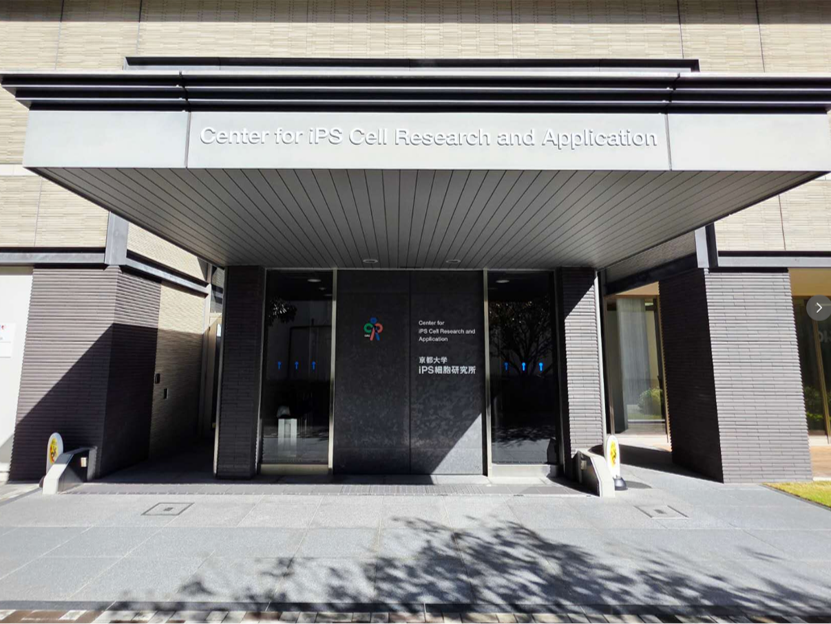
Hopstem Presents Two-Year Clinical Data of hNPC01 Ischemic Stroke Program at ISSCR iPSC 20th Anniversary Symposium and Delivers Invited Seminar at CiRA

Hopstem Receives U.S. FDA IND Clearance and Fast Track designations for hNPC01 in Hemorrhagic Stroke and Traumatic Brain Injury-Expanding Clinical Development Across Three Major Brain Injury Indications

Hopstem hNPC01 Earns FDA RMAT Designation for Chronic Stroke Therapy

FDA Granted Hopstem’s hNPC01 for Chronic Ischemic Stroke Approval to Enter Phase 2/3 Adaptive Pivotal Clinical Trial with Bridging Study


R&D Center: Building 11,Heda Medicine Valley V, Qiantang Area,
Hangzhou, Zhejiang, China
Manufacturing Center: 3rd & 4th Floor, Building 10,Heda Medicine Valley lll,
Qiantang Area, Hangzhou, Zhejiang, China
U.S. Office: 103 Carnegie center, Suite 300, Princeton,
NJ 08540, USA

